
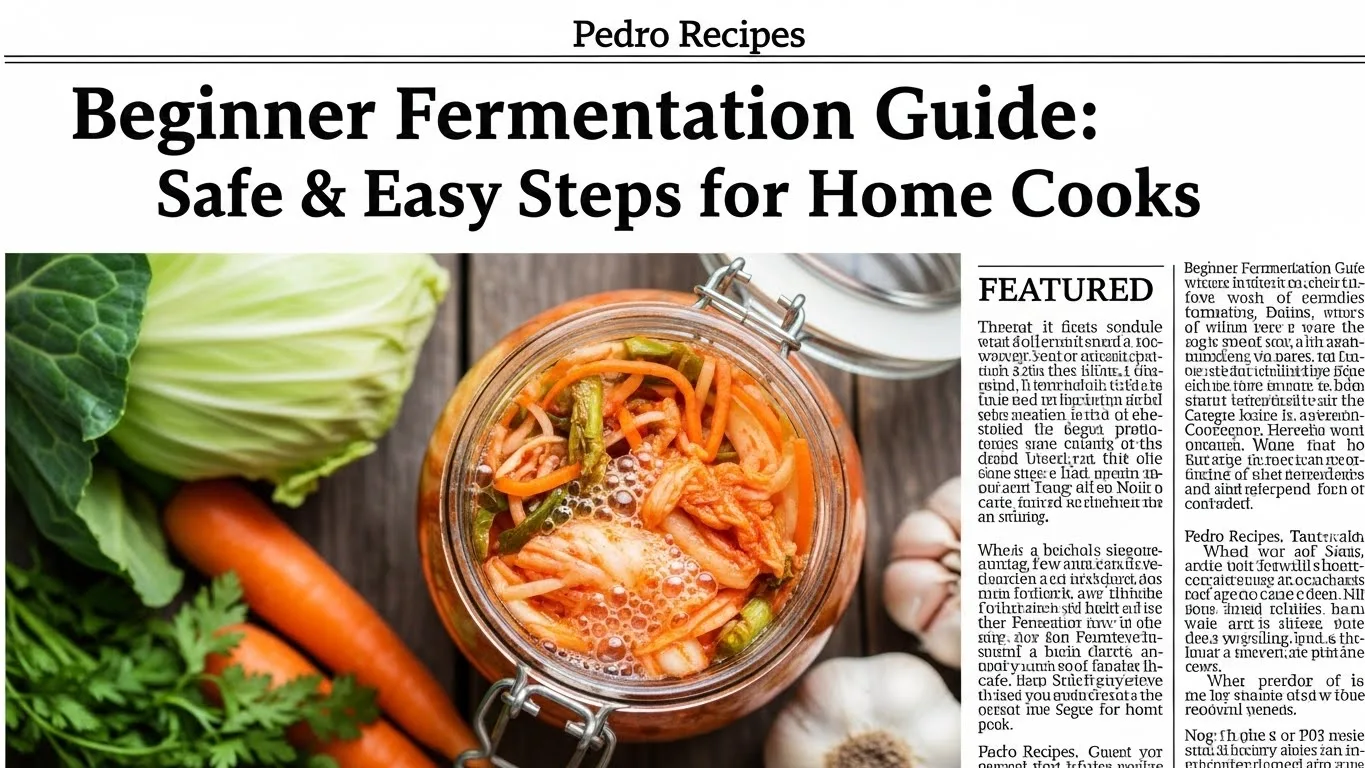
Beginner fermentation guide – if you’ve been searching for one, you’re in the right place. Making your own sauerkraut, kimchi, or kombucha at home might seem intimidating at first, but it doesn’t have to be. Fermented foods have been gaining popularity for their incredible health benefits and unique flavors, yet many home cooks hesitate to try fermentation because they’re worried about safety or getting it wrong.
That’s exactly why Pedro Recipes has recently launched a comprehensive beginner fermentation guide designed to make this ancient preservation technique accessible to everyone. Whether you’re interested in gut health, reducing food waste, or simply exploring new flavors in your kitchen, fermentation might be the perfect next step in your cooking journey.
In this beginner fermentation guide, we’ll explore what makes these new fermentation resources so valuable, walk through the basics of safe fermentation practices, and help you decide which fermented foods might be the easiest place to start your own fermentation adventure.
Why Fermentation Is Having a Moment
Fermentation isn’t just a trendy buzzword—it’s one of the oldest food preservation methods humans have used. From Korean kimchi to German sauerkraut, cultures worldwide have relied on fermentation to preserve vegetables, create probiotics naturally, and develop complex flavors that simply can’t be replicated any other way.
What’s driving the current interest? For starters, research continues to highlight the connection between gut health and overall wellness. Fermented foods are packed with beneficial bacteria that support digestion and may even boost immunity. Plus, with more people cooking at home and looking for sustainable practices, fermentation offers a way to extend the life of fresh produce while creating delicious, nutritious foods.
However, the fear of “doing it wrong” stops many beginners before they even start. Questions about botulism, mold, and spoilage are completely valid, which is why having a reliable beginner fermentation guide makes all the difference.
What Makes This Beginner Fermentation Guide Different
The newly expanded collection from Pedro Recipes takes a refreshingly practical approach to fermentation education. Rather than overwhelming beginners with complex recipes or vague instructions, this beginner fermentation guide prioritizes two critical elements: safety and simplicity.
Each guide breaks down the fermentation process into manageable steps that anyone can follow, regardless of prior experience. You’ll find clear explanations of what’s happening during fermentation, how to recognize signs of successful fermentation versus spoilage, and exactly what equipment you actually need (spoiler: it’s less than you think).
The resources cover a variety of fermented foods, allowing you to choose projects that match your interests and comfort level. From quick-fermenting pickles that are ready in days to longer-term projects like traditional sauerkraut, there’s something for every schedule and skill level.
Perhaps most importantly, these guides address the safety concerns head-on. You’ll learn about pH levels, salt ratios, and temperature control—the three key factors that determine whether your fermentation succeeds or fails. Understanding these basics gives you the confidence to experiment while staying within safe parameters.
Getting Started: Which Fermented Food Should You Try First?
If you’re brand new to fermentation, choosing your first project wisely can mean the difference between a successful experience and a discouraging one. Here are some beginner-friendly options to consider:
Quick Refrigerator Pickles
These aren’t traditional fermented pickles, but they’re an excellent gateway into preservation. You’ll get comfortable with brine ratios and flavor combinations before committing to longer fermentation times. Plus, they’re ready to enjoy in just a few days, which makes them incredibly gratifying for beginners.
Sauerkraut
Don’t let the German name intimidate you—sauerkraut is actually one of the simplest fermented foods to make. With just cabbage and salt, you can create your own tangy, probiotic-rich condiment. The process teaches you fundamental fermentation principles like proper salting, creating an anaerobic environment, and recognizing when fermentation is complete.
If you’re interested in exploring more traditional preservation methods, you might also enjoy learning about making your own butter, which shares that same satisfaction of creating something from scratch.
Water Kefir
For those interested in fermented beverages, water kefir offers a dairy-free alternative to milk kefir. It’s naturally fizzy, mildly sweet, and you can flavor it with fruits and herbs. The process is straightforward and forgiving, making it perfect for beginners who want to try beverage fermentation.
Kimchi
While kimchi might seem advanced, basic versions are surprisingly approachable. You’ll work with more ingredients than sauerkraut, but the principles remain the same. Making kimchi also opens up a world of Korean cuisine possibilities in your kitchen.
Essential Equipment and Ingredients
One of the biggest myths about fermentation is that you need specialized, expensive equipment. In reality, you probably already have most of what you need in your kitchen.
The Basics
For most fermentation projects, you’ll need:
- Glass jars (mason jars work perfectly)
- Non-iodized salt (sea salt or kosher salt)
- Filtered or non-chlorinated water
- A weight to keep vegetables submerged (you can use a small glass jar, a clean stone, or purchase glass fermentation weights)
- A clean cloth or coffee filter to cover the jar
- A rubber band to secure the cover
That’s honestly it for basic vegetable fermentation. You don’t need airlocks, special crocks, or fermenting kits when you’re just starting out, though these tools can be nice additions later on.
Ingredient Quality Matters
When it comes to fermentation, ingredient quality genuinely affects your results. Fresh, organic vegetables will ferment better than older, conventionally grown produce. The natural bacteria on organic vegetables aren’t competing with pesticide residues, which helps fermentation proceed smoothly.
Similarly, the type of salt you use makes a difference. Iodized table salt can interfere with fermentation and may cause off-flavors or discoloration. Stick with sea salt, kosher salt, or Himalayan pink salt for best results.
Just as ingredient quality matters in fermentation, it’s equally important in other traditional cooking methods. For example, when you’re making homemade pasta, using high-quality flour dramatically impacts the texture and flavor of your final dish.
Safety First: Understanding the Science Behind Fermentation
Let’s address the elephant in the room: is home fermentation safe? The short answer is yes, when done correctly. Fermentation is actually one of the safest preservation methods because the process itself creates an environment hostile to harmful bacteria.
How Fermentation Protects Your Food
During fermentation, beneficial bacteria (primarily Lactobacillus species) convert sugars and starches into lactic acid. This lactic acid lowers the pH of your ferment, creating an acidic environment where pathogenic bacteria like E. coli and salmonella cannot survive.
The salt you add to vegetable ferments serves multiple purposes: it draws moisture out of the vegetables, creates a brine that inhibits harmful bacteria initially, and helps keep vegetables crunchy during fermentation.
As long as your vegetables remain submerged in brine and you use the correct salt ratio (typically two to three percent salt by weight), your fermentation will be safe.
Recognizing Good Fermentation vs. Spoilage
This is where many beginners get nervous. How do you know if your ferment is safe or if it’s gone bad?
Healthy fermentation signs include:
- Bubbles rising to the surface (this is CO2 from active fermentation)
- Cloudy brine (beneficial bacteria at work)
- A pleasantly sour, tangy smell
- White film on the surface (kahm yeast—harmless and easily removed)
Warning signs of spoilage include:
- Fuzzy mold in colors like black, pink, or orange
- A truly foul smell (not just sour, but rotten)
- Slimy texture throughout (not just on the surface)
When in doubt, trust your senses. If something smells genuinely rotten or looks like it’s growing a science experiment, it’s better to compost it and start over. However, most ferments that are properly salted and kept submerged will succeed beautifully.
Common Fermentation Mistakes and How to Avoid Them
Even with good instructions, beginners often encounter a few common pitfalls. Here’s how to sidestep them:
Using Too Little Salt
Undersalting is probably the most common beginner mistake. While you might worry about your ferment being too salty, using insufficient salt can allow spoilage organisms to take hold before beneficial bacteria establish themselves. Follow the recommended salt percentages in your recipes, and remember that you can always rinse fermented vegetables before eating if they taste too salty.
Not Keeping Vegetables Submerged
Vegetables that float above the brine are exposed to oxygen, which can lead to mold growth. Always use a weight to keep everything submerged beneath the brine. Check your ferments daily for the first week and push down any floating pieces.
Fermenting in a Too-Hot or Too-Cold Environment
Temperature significantly affects fermentation speed. Too hot (above 75°F), and your ferment might develop off-flavors or kahm yeast. Too cold (below 60°F), and fermentation might stall completely. Room temperature (68-72°F) is generally ideal for most vegetable ferments.
Giving Up Too Soon
Fermentation takes time, and the first few days might not show much activity. Be patient. Most vegetable ferments need at least five to seven days at room temperature, though many benefit from two to three weeks. Taste as you go and ferment until you reach a flavor you enjoy.
Beyond Vegetables: Exploring Other Fermentation Projects
Once you’ve mastered basic vegetable fermentation, a whole world of possibilities opens up. Fermentation extends far beyond sauerkraut and pickles.
Fermented Hot Sauces
If you love spicy foods, fermenting hot peppers before turning them into sauce adds incredible depth and complexity. The fermentation process mellows the heat slightly while developing rich, tangy flavors that complement the peppers beautifully.
Sourdough Bread
Sourdough is perhaps the most rewarding (and challenging) fermentation project. Maintaining a sourdough starter and learning to bake naturally leavened bread requires dedication, but the results are unmatched. The tangy flavor, improved digestibility, and artisan quality make sourdough worth the effort.
If you’re ready to dive into bread making, you might start by learning to make traditional French bread before tackling sourdough, as it helps you understand bread fundamentals.
Fermented Beverages
Beyond water kefir, you can explore kombucha, ginger beer, kvass, and even naturally fermented sodas. Each offers unique flavors and probiotic benefits, and most are surprisingly simple once you understand the basic principles.
Dairy Fermentation
Yogurt, kefir, buttermilk, and cheese all rely on fermentation. While these require different bacterial cultures than vegetable fermentation, the underlying principles remain consistent. Many home cooks find dairy fermentation to be incredibly satisfying since you’re creating products that would otherwise be expensive to purchase.
Building Your Fermentation Confidence
The most important thing to remember about fermentation is that it’s a practice, not a perfection. Your first batch might not turn out exactly as you imagined, and that’s completely okay. Each fermentation teaches you something new about the process, your ingredients, and your own preferences.
Start small with projects that excite you. Don’t try to ferment everything at once. Instead, focus on one or two recipes, repeat them several times, and really get comfortable with the process before expanding your repertoire.
Keep notes on your ferments—what you made, when you started it, the temperature in your kitchen, and how it turned out. Over time, these notes become invaluable references that help you replicate successes and avoid repeating mistakes.
Join online fermentation communities where you can ask questions, share your successes, and learn from others. The fermentation world is incredibly welcoming to beginners, and experienced fermenters are usually thrilled to help newcomers troubleshoot problems.
The Bigger Picture: Why Fermentation Matters
Beyond the health benefits and delicious flavors, fermentation connects us to food traditions that span millennia. Every culture on Earth has developed fermented foods suited to their climate, available ingredients, and taste preferences. When you ferment at home, you’re participating in this ancient practice and keeping these traditions alive.
Fermentation also promotes food sustainability. It allows you to preserve seasonal abundance, reduce food waste, and create nutritious foods from simple ingredients. In a world increasingly concerned with food security and environmental impact, these skills become more valuable every day.
Moreover, there’s something deeply satisfying about creating food through transformation. Watching cabbage become sauerkraut or cucumbers turn into pickles connects you to the living processes that make these changes possible. It’s cooking as collaboration with beneficial microorganisms—and it’s genuinely magical once you experience it.
Your Fermentation Journey Starts Now
With the right guidance and a willingness to experiment, anyone can learn to ferment foods safely at home. The expanded collection of resources from Pedro Recipes removes the mystery and intimidation from this valuable skill, making it accessible regardless of your previous experience.
Whether you’re motivated by health benefits, culinary curiosity, or sustainability concerns, fermentation offers something meaningful. Start with a simple project, follow the safety guidelines, be patient with the process, and trust that beneficial bacteria have been doing this work successfully for thousands of years.
Your first batch of homemade sauerkraut or pickles might just be the beginning of a lifelong fermentation practice that transforms how you think about food, preservation, and cooking.
Similarly, exploring other traditional cooking techniques like making homemade ricotta cheese can complement your fermentation journey and expand your overall kitchen skills.
Source
This article was inspired by information originally published by PRFree Press Release Distribution Service.