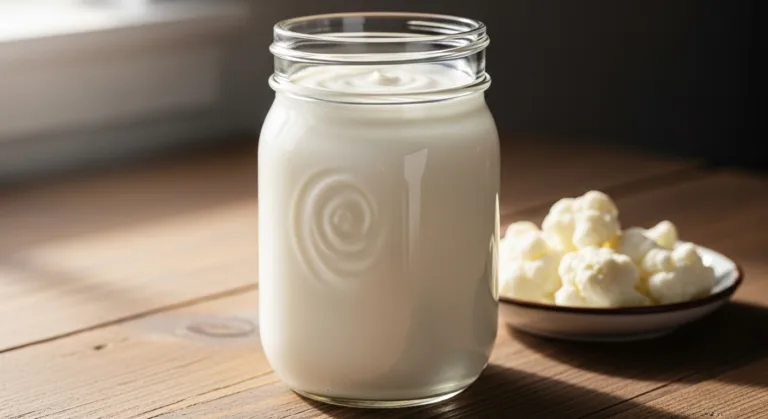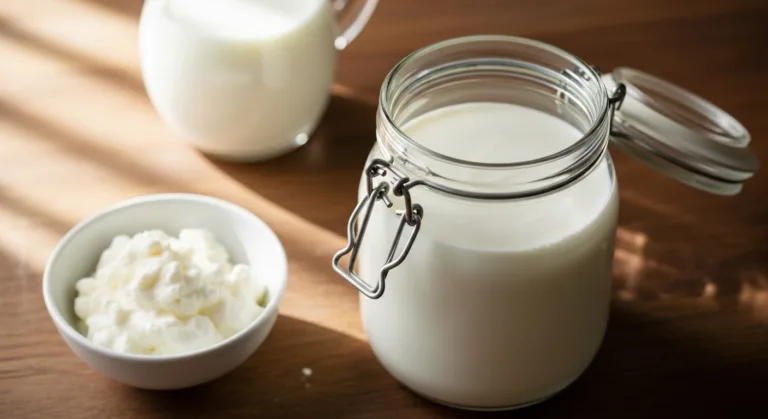

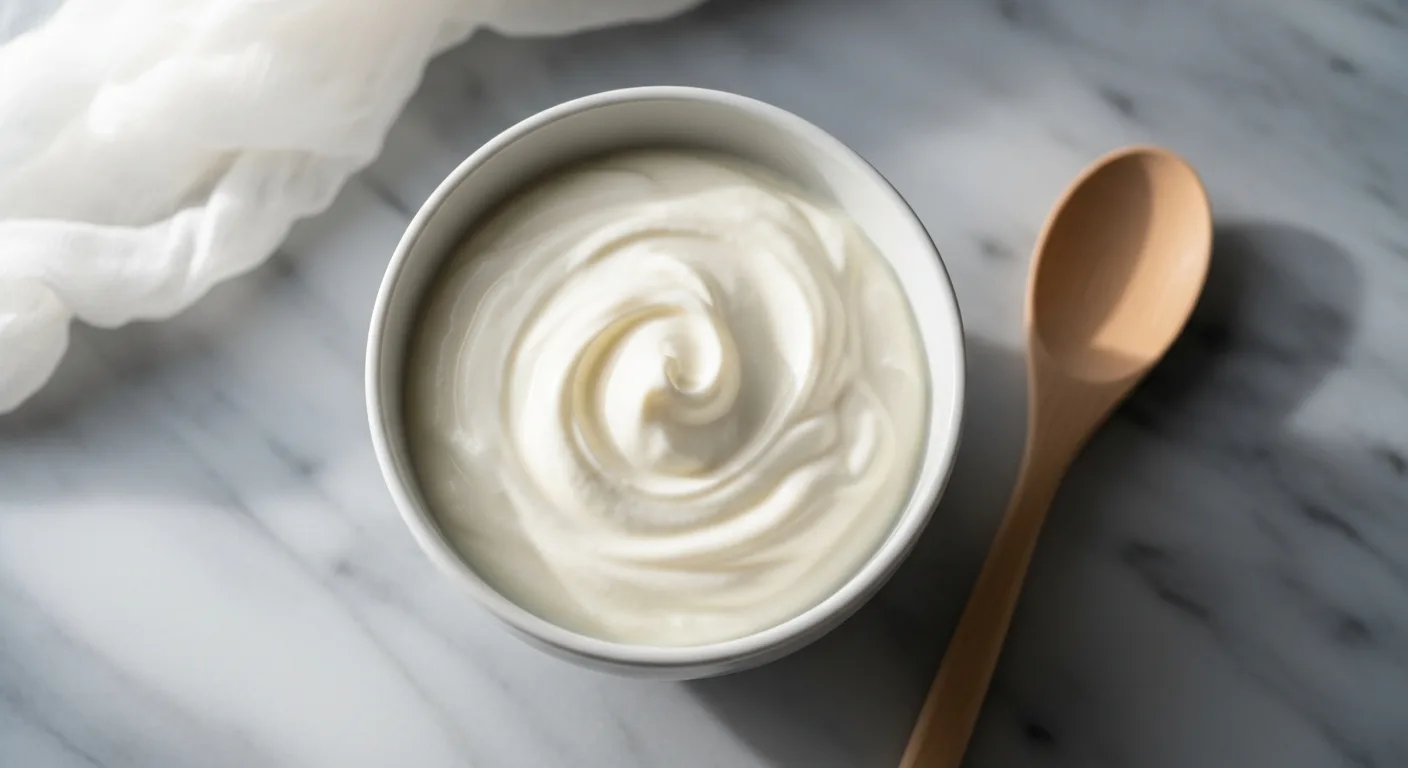
Learning how to make Greek yogurt at home changed everything about my morning routine. Instead of spending five dollars on a small container at the store, I started with plain yogurt I already had in my fridge and ended up with something better. The process is surprisingly simple—basically, you’re removing the liquid whey to concentrate the protein and create that signature thick texture. After testing different methods over several months, I found the sweet spot between effort and results, and honestly, once you taste homemade Greek yogurt, it’s hard to go back to store-bought.
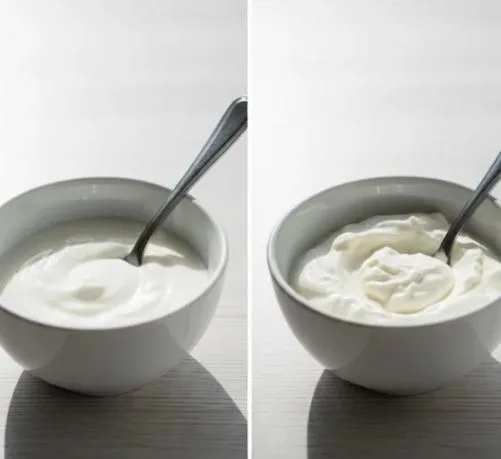
The beauty of making Greek yogurt at home lies in the control you have over texture and flavor. Therefore, you can strain it for just two hours for a slightly thick consistency, or go the full eight hours for something almost cheese-like. Additionally, you avoid the stabilizers and thickeners that many commercial brands add.
Why You’ll Love This Recipe
First, making Greek yogurt at home saves serious money. A 32-ounce container of plain yogurt costs about three dollars and yields roughly 16 ounces of Greek yogurt—half the price of buying it pre-strained. Moreover, you control exactly what goes into your yogurt, which means no added sugars, artificial flavors, or unnecessary ingredients.
The process itself is incredibly forgiving. Unlike making yogurt from scratch, which requires precise temperature control and live cultures, straining regular yogurt into Greek yogurt is nearly foolproof. Furthermore, you can stop the straining process whenever you reach your desired consistency. I’ve accidentally left mine straining overnight and ended up with yogurt cheese (labneh), which was a happy accident I now make intentionally.
The environmental angle matters too. Instead of throwing away those small plastic containers every week, you’re using one large tub and creating less waste. Plus, the leftover whey isn’t garbage—it’s liquid gold for baking, smoothies, or even watering plants.
Step-by-Step Instructions
1. Choose your starting yogurt carefully. Select plain, whole-milk yogurt with live active cultures and minimal ingredients. Check the label—it should list milk and cultures, nothing else. I prefer whole milk yogurt because the fat content creates a richer final product, but 2% works fine if you’re watching calories.
2. Set up your straining station. Line a fine-mesh strainer with three layers of cheesecloth or a clean, thin kitchen towel. Place the strainer over a large bowl, making sure there’s at least three inches of clearance between the bottom of the strainer and the bowl. This space catches the whey as it drips out.
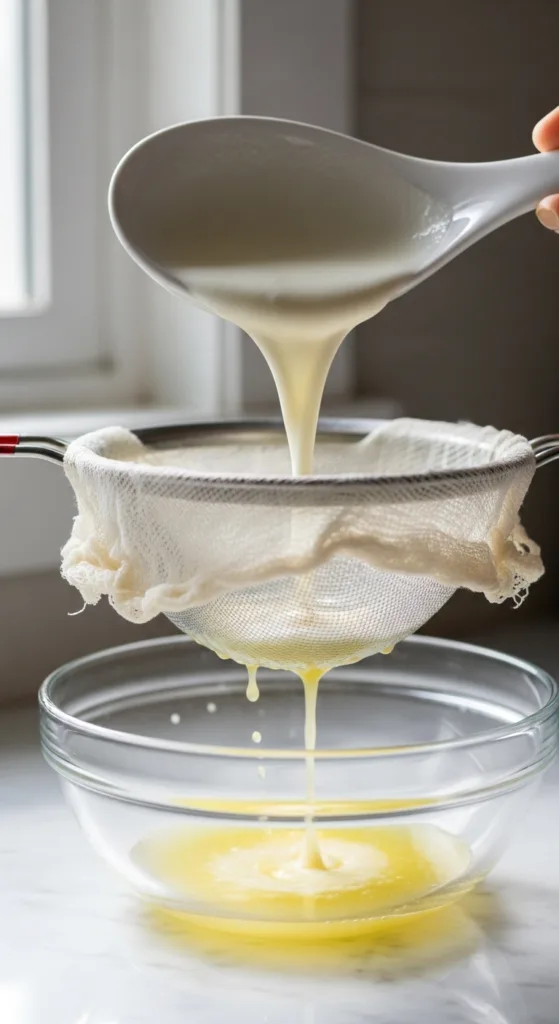
3. Pour the yogurt into the lined strainer. Dump your entire container of regular yogurt into the center of the cheesecloth. Spread it out slightly so it’s not piled too high in one spot—this helps even straining.
4. Cover and refrigerate. Lay a piece of plastic wrap or a clean kitchen towel over the top to keep out any fridge odors. Slide the whole setup into your refrigerator and let gravity do its work. The cold temperature slows any bacterial activity while the whey separates.
5. Check progress after 2 hours. Lift the cheesecloth gently and check the texture. At this point, you’ll have a slightly thicker yogurt—good for parfaits or smoothie bowls. If you want true Greek yogurt thickness, keep going.
6. Strain for 4-8 hours for Greek consistency. Most people find 4-6 hours hits the perfect balance. The yogurt should be thick enough to hold a spoon upright. After 8 hours, you’re approaching yogurt cheese territory, which is fantastic for spreading on toast or using as a cream cheese substitute.
7. Transfer to a container. Scrape the strained yogurt into an airtight container. You’ll notice you’ve lost about half the volume from the whey separation—that’s normal and expected.
8. Flavor if desired. Now’s the time to add honey, vanilla extract, fruit preserves, or savory ingredients like garlic and herbs. Stir thoroughly and refrigerate for at least 30 minutes to let flavors meld.
Don’t miss our: Probiotic Yogurt Drinks
Expert Tips for Success
The quality of your starting yogurt makes or breaks the final product. I learned this the hard way when I tried using ultra-pasteurized yogurt with added gelatin—it barely strained at all because the stabilizers held the whey in suspension. Stick with simple, clean-label yogurts.
Don’t throw away that whey. I started saving it after reading about its protein content and acidity. It works brilliantly in pancake batter (replace half the liquid), bread dough (adds tang and helps with rise), or smoothies (extra protein boost). Some people use it for their skin or hair, though I haven’t ventured there yet.
Temperature matters more than you’d think. Cold yogurt strains slower but produces a smoother texture because the proteins don’t separate as aggressively. Room temperature yogurt strains faster but can sometimes develop a slightly grainy texture. I always strain cold from the fridge.
| Fermentation Time | Final Texture | Flavor Profile | Best Uses |
|---|---|---|---|
| 12–18 hours | Thin, drinkable | Mild, slightly sweet | Smoothies, beginners, drinking straight |
| 24 hours | Medium thickness | Balanced tang | All-purpose use, baking |
| 36–48 hours | Thick, separated | Very tangy, sour | Making kefir cheese, salad dressings |
If you’re straining multiple batches, wash your cheesecloth in hot water with a bit of white vinegar to remove any sour smell. Air dry completely before storing. I keep mine in a sealed container and they last for months.
Serving Ideas
Plain Greek yogurt at home becomes the base for countless meals. For breakfast, I top it with granola, fresh berries, and a drizzle of maple syrup—simple but satisfying. The thick texture holds up to crunchy toppings without getting watery like regular yogurt does.
It works beautifully in savory applications too. Mix it with cucumber, garlic, lemon juice, and dill for a quick tzatziki that’s perfect with grilled vegetables or as a sandwich spread. I’ve also replaced sour cream with Greek yogurt in tacos, baked potatoes, and chili—nobody notices the swap, and you’re cutting calories significantly.
For dessert, fold in some cocoa powder and a touch of honey for a protein-packed chocolate mousse. Alternatively, blend it with frozen fruit for instant frozen yogurt. My nephew requests this every time he visits because it tastes like ice cream but I can claim it’s healthy.
Use it as a marinade base for chicken or fish. The acidity tenderizes the meat while the thickness helps spices and herbs stick. I combine Greek yogurt with lemon zest, paprika, and cumin for chicken kebabs that come off the grill incredibly moist.
Discover great ideas likes: Complete Home Kefir Production
Storage & Reheating
Store your homemade Greek yogurt in an airtight container in the refrigerator for up to two weeks. The flavor gets tangier as it ages, which I actually prefer for savory applications. If you notice any liquid pooling on top, that’s just more whey separating—either stir it back in or pour it off depending on how thick you want it.
Don’t freeze Greek yogurt if you plan to eat it plain—the texture breaks down when thawed and becomes grainy. However, it freezes perfectly fine for smoothies or baking. I portion it into ice cube trays, freeze until solid, then transfer to a freezer bag. Each cube equals about two tablespoons, making it easy to grab what you need.
Greek yogurt doesn’t need reheating in most cases, but if you’re cooking with it, add it at the end of cooking and keep temperatures low. High heat causes the proteins to curdle and separate, which looks unappetizing even though it’s still safe to eat.
Recipe Variations
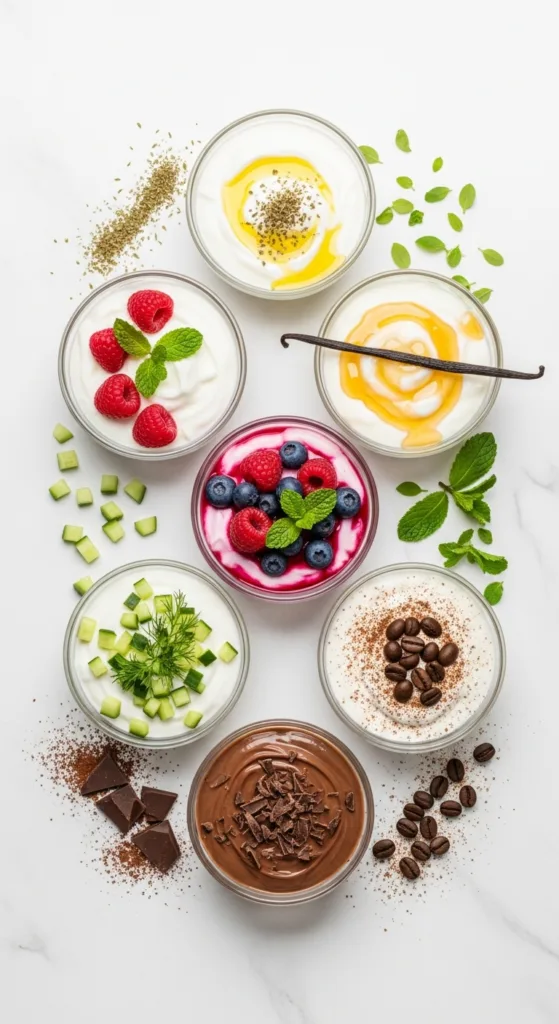
Vanilla Bean Greek Yogurt: Split one vanilla bean lengthwise and scrape out the seeds. Stir the seeds into your strained yogurt along with two tablespoons of honey. The flavor is incomparably better than vanilla extract alone.
Savory Herb Blend: Mix strained yogurt with minced fresh herbs (dill, parsley, chives), garlic powder, sea salt, and black pepper. This becomes your go-to dip for vegetables or chips.
Honey Lavender: Add two tablespoons of honey and one teaspoon of dried culinary lavender. Let it sit in the fridge overnight so the lavender infuses gently. Strain out the flowers before serving if you prefer a smoother texture.
Spiced Yogurt: Toast cumin seeds, coriander seeds, and a pinch of cayenne in a dry pan until fragrant. Grind them and stir into your yogurt with a squeeze of lime juice. This works wonderfully alongside Indian dishes or as a cooling element with spicy food.
Chocolate Protein: Blend strained yogurt with unsweetened cocoa powder, a bit of honey or maple syrup, and a splash of vanilla. You can add a scoop of protein powder if you want extra nutrition for post-workout snacks.
Coffee Greek Yogurt: Dissolve one tablespoon of instant espresso powder in a teaspoon of hot water, then stir into your yogurt with a touch of sugar. It’s like tiramisu in yogurt form.
FAQs
Conclusion
Making Greek yogurt at home transforms a simple pantry staple into something special. Whether you’re looking to save money, control your ingredients, or just enjoy the satisfaction of DIY food projects, straining your own Greek yogurt delivers on all fronts. Start with good-quality plain yogurt, give it time to strain, and you’ll end up with creamy, protein-packed yogurt that works in everything from breakfast bowls to dinner marinades. The process is forgiving, the results are delicious, and once you’ve tried it, you’ll wonder why you ever bought the expensive stuff in those tiny containers.
Give it a try this weekend—your future self (and your wallet) will thank you.
Recipe by William Hardin, a home cook passionate about easy comfort food.

Greek Yogurt at Home: Straining and Flavoring
- Total Time: 4-8 hours
- Yield: About 2 cups
Description
Homemade Greek yogurt becomes thick, creamy, and customizable with simple straining and your favorite flavor additions.
Ingredients
- Plain whole-milk yogurt
- Cheesecloth or thin kitchen towel
- Fine-mesh strainer
- Large bowl
- Plastic wrap or clean towel
- Optional: honey, vanilla, fruit preserves, herbs, spices
Instructions
- Select plain yogurt with live active cultures.
- Line a fine-mesh strainer with cheesecloth.
- Place the strainer over a bowl.
- Pour yogurt into the lined strainer and spread evenly.
- Cover with plastic wrap or a towel.
- Refrigerate and strain for 2-8 hours.
- Check after 2 hours and continue straining until thick.
- Transfer strained yogurt to an airtight container.
- Add sweet or savory flavorings if desired.
- Refrigerate before serving.
Notes
Use high-quality plain yogurt for the best results. Save leftover whey for smoothies, baking, or bread making.
- Prep Time: 10 minutes
- Cook Time: 0 minutes
- Category: Breakfast
- Method: No-Cook
- Cuisine: Universal
Nutrition
- Serving Size: 1 cup
- Calories: 130
- Sugar: 6g
- Sodium: 60mg
- Fat: 5g
- Saturated Fat: 3g
- Unsaturated Fat: 2g
- Trans Fat: 0g
- Carbohydrates: 7g
- Fiber: 0g
- Protein: 12g
- Cholesterol: 15mg
Keywords: Greek yogurt, homemade yogurt, yogurt straining, DIY Greek yogurt