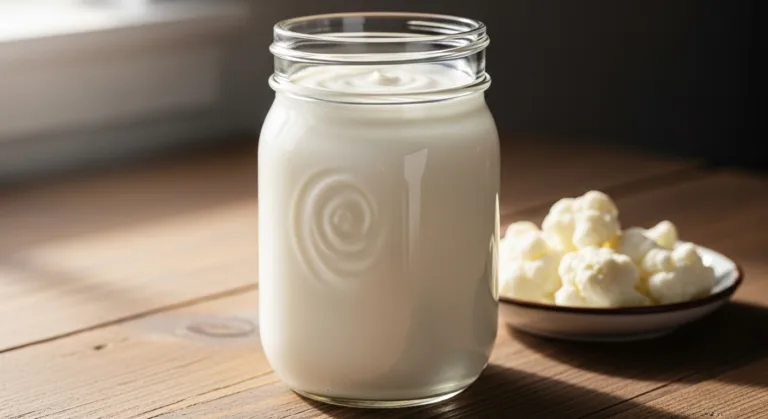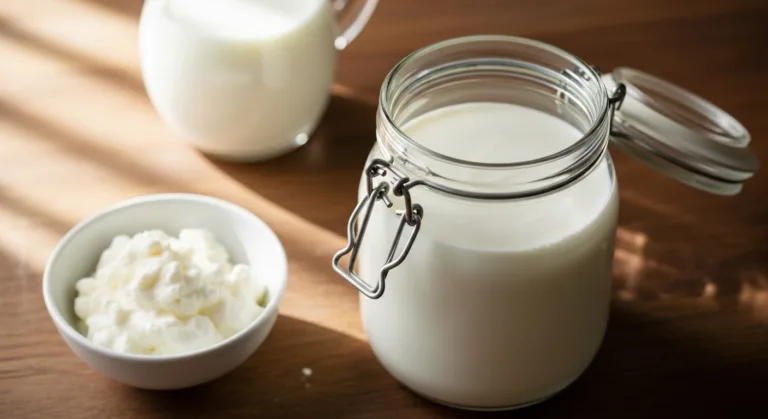


If your dormant kefir grains have been sitting in the back of your fridge or dried out on the counter, you’re probably wondering if they’re still salvageable. The good news? In most cases, they absolutely are. I’ve brought back grains that looked completely lifeless after months of neglect, and honestly, it’s one of the most rewarding kitchen experiments you can do.
Kefir grains are surprisingly resilient. Unlike sourdough starters or other fermentation cultures, these little clusters of bacteria and yeast can survive extended periods of dormancy. However, they do need some careful attention to wake up and start producing that tangy, probiotic-rich kefir we all love. I first learned this lesson when I left a jar of grains in my fridge for three months while traveling. When I got back, they looked sad and separated, but after a week of daily milk changes, they were bubbling away like nothing had happened.
Throughout this guide, I’ll walk you through the exact process I use to revive dormant kefir grains, along with troubleshooting tips I’ve picked up from years of home fermenting. Additionally, you’ll learn how to tell if your grains are truly dead or just taking a long nap.
Why You’ll Love This Recipe
Reviving dormant kefir grains isn’t technically a recipe, but it’s a process worth mastering if you’re into home fermentation. Here’s why this technique is a game-changer:
It saves money. Instead of ordering new grains online, you can bring your existing ones back to life. Consequently, you’re not waiting for shipping or spending $15–$30 on replacements.
It’s environmentally friendly. Rather than tossing out your grains, you’re giving them a second chance. Moreover, you’re reducing waste and maintaining a sustainable fermentation practice.
It builds confidence. Successfully reviving grains proves you understand the fundamentals of fermentation. Furthermore, it prepares you to handle other fermentation challenges down the road.
You’ll get better kefir. Revived grains that have been slowly reactivated often produce more consistent, flavorful kefir than brand-new grains. In fact, some fermentation enthusiasts claim older, well-maintained grains have more complex probiotic profiles.
It’s surprisingly satisfying. There’s something almost magical about watching dormant grains slowly wake up and start fermenting again. Honestly, it feels like you’re performing kitchen alchemy.
Discover our step-by-step methods for Homemade Buttermilk
Step-by-Step Instructions
Step 1: Assess Your Grains
First, take a good look at your dormant kefir grains. Are they dried out and hard, or have they been stored in milk or water in the fridge? The revival method differs slightly depending on their condition.
For dried grains, you’ll need to rehydrate them first. Meanwhile, grains stored in liquid just need fresh milk and patience. Check for any off-putting smells—if they smell like rotten cheese or have visible mold (fuzzy spots, not just discoloration), they’re probably done for.
Step 2: Rinse Gently (If Needed)
If your grains have been sitting in old milk that’s separated or smells very sour, give them a quick rinse under cool, filtered water. However, don’t overdo it—you want to preserve the beneficial bacteria on the surface.
I usually just swish them gently in a small bowl of filtered water for about 10 seconds. Then, I strain them out and move on to the next step.
Step 3: Place in Fresh Milk
Put your dormant kefir grains in a clean glass jar and cover them with fresh, whole milk. The ratio should be about 1 tablespoon of grains to 1 cup of milk. Furthermore, make sure you’re using the best quality milk you can find—organic, grass-fed if possible.
Avoid ultra-pasteurized milk, as it doesn’t ferment as reliably. Additionally, don’t fill the jar more than three-quarters full, because you need room for gases to release during fermentation.
Step 4: Cover and Store at Room Temperature
Cover the jar loosely with a coffee filter, cheesecloth, or a paper towel secured with a rubber band. This allows the grains to breathe while keeping out dust and insects. Consequently, your fermentation will stay clean and active.
Place the jar in a warm spot away from direct sunlight—ideally between 68°F and 78°F. I keep mine on the kitchen counter near the stove, where it stays consistently warm.
Step 5: Change the Milk Daily
For the first few days, your grains probably won’t ferment the milk much at all. That’s completely normal. Nevertheless, you should change the milk every 24 hours to keep things fresh and prevent bacterial overgrowth.
Strain out the grains, discard the milk (or use it in baking if it smells okay), and repeat the process with fresh milk. After three or four days, you should start noticing some thickening or tangy smell.

Step 6: Watch for Signs of Activity
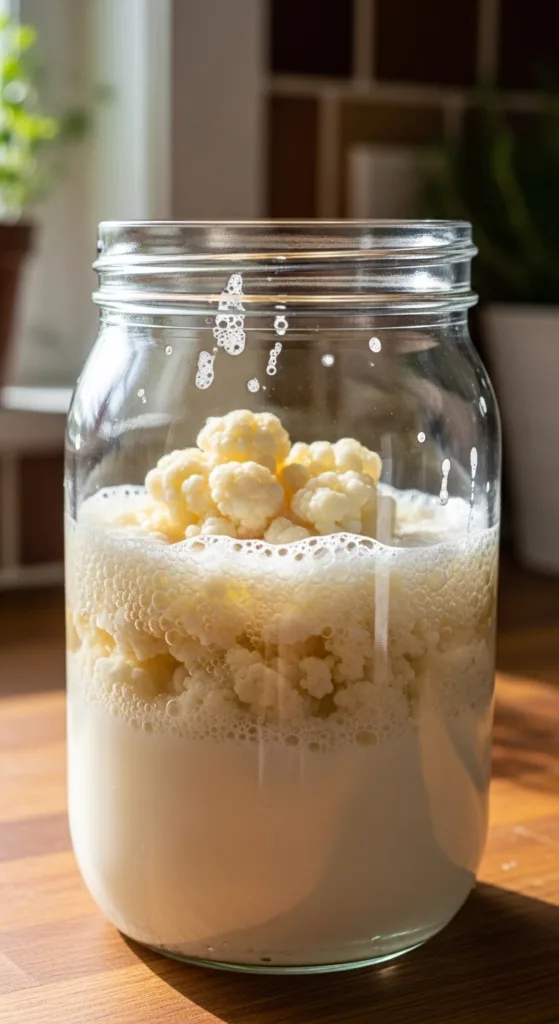
Around day 4 or 5, your grains should start showing signs of life. The milk will begin to thicken, separate slightly, and develop that characteristic kefir tang. Once this happens, you can gradually increase the milk-to-grain ratio.
By day 7, your grains should be fully active and producing drinkable kefir. At this point, you can switch to a regular fermentation schedule.
Step 7: Transition to Regular Fermentation
Once your grains are consistently fermenting milk within 24 hours, they’re officially revived. You can now ferment them at your preferred ratio (typically 1 tablespoon grains to 2–4 cups milk) and start drinking the kefir.
Congratulations—you’ve successfully brought your dormant kefir grains back to life!
Don’t miss our: Fermented Dairy for Kids
Expert Tips for Success
Be patient. Revival can take anywhere from 3 days to 2 weeks depending on how long your grains were dormant. Therefore, don’t give up if you don’t see immediate results.
Use whole milk initially. The fat content provides extra nutrients that help grains recover faster. Once they’re active again, you can switch to low-fat or non-dairy alternatives if you prefer.
Keep everything clean. Use clean jars, utensils, and filtered water. However, avoid antibacterial soap on your fermentation equipment—regular dish soap is fine.
Don’t taste the first few batches. The milk from the revival process might contain off-flavors or unbalanced bacteria. Consequently, it’s best to discard it and wait until fermentation is consistent.
Monitor temperature carefully. Too cold, and your grains won’t wake up. Too hot, and you might kill them. Moreover, dramatic temperature swings can stress the culture.
If grains don’t revive after 2 weeks, try switching to a different milk brand or increasing the room temperature slightly. Sometimes, grains just need a little extra encouragement.
Serving Ideas
Once your kefir grains are revived and producing great kefir, here’s how to enjoy it:
Drink it straight. Pour a glass and enjoy the tangy, probiotic-rich flavor as a healthy breakfast drink or afternoon snack.
Blend into smoothies. Combine kefir with frozen berries, banana, and a drizzle of honey for a creamy, gut-friendly smoothie.
Make overnight oats. Use kefir instead of regular milk to soak your oats overnight. The result is tangy, creamy, and packed with probiotics.
Top with granola and fruit. Treat kefir like yogurt—add your favorite toppings for a quick breakfast bowl.
Use in salad dressings. Whisk kefir with herbs, garlic, lemon juice, and olive oil for a tangy, creamy dressing.

Storage & Reheating
Short-term storage: Keep active kefir grains fermenting on your counter with daily or every-other-day milk changes. The kefir itself lasts about 2 weeks in the fridge.
Long-term storage: If you need a break from fermenting, store grains in fresh milk in the fridge. They’ll stay dormant for 2–3 weeks this way. Change the milk every week to keep them healthy.
Drying for extended storage: For breaks longer than a month, you can dry your grains. Spread them on parchment paper in a cool, dry place for 3–5 days until completely hard. Store in an airtight container in the fridge for up to 6 months.
Freezing: You can also freeze grains in a small amount of milk. However, this method has mixed results—some grains revive easily, while others struggle.
There’s no reheating involved with kefir, since it’s meant to be consumed cold or at room temperature. In fact, heating kefir above 110°F kills the beneficial probiotics.
Recipe Variations
Water kefir grains: If you have water kefir grains instead of milk kefir grains, the revival process is similar. Use sugar water (1/4 cup sugar per quart of water) instead of milk, and change it daily.
Non-dairy milk: Once your grains are fully active, you can attempt non-dairy fermentation with coconut milk or oat milk. However, you’ll need to “rest” them in regular milk every few batches to keep them healthy.
Faster revival method: Some fermenters add a tablespoon of finished kefir to the jar to jumpstart fermentation. This can shave off a day or two from the revival process.
Double fermentation: After your grains are revived, try a second fermentation by straining out the grains and letting the finished kefir sit at room temperature for another 12–24 hours. This increases carbonation and develops more complex flavors.
| Fermentation Time | Consistency | Flavor Profile | Best Uses |
|---|---|---|---|
| 12–18 hours | Thin, drinkable | Mild, slightly sweet | Smoothies, beginners, drinking straight |
| 24 hours | Medium thickness | Balanced tang | All-purpose use, baking |
| 36–48 hours | Thick, separated | Very tangy, sour | Making kefir cheese, salad dressings |
FAQs
Conclusion
Reviving dormant kefir grains might seem intimidating at first, but it’s honestly one of the most straightforward fermentation projects you can tackle. With fresh milk, a clean jar, and a little patience, you can bring even the most neglected grains back to life. I’ve done it more times than I can count, and each time feels like a small victory.
Remember, the key is consistency—daily milk changes, proper temperature, and giving your grains the time they need to wake up. Once they’re active again, you’ll be back to enjoying probiotic-rich kefir that supports your gut health and tastes amazing.
Recipe by John Pace, a home cook passionate about easy comfort food and sustainable fermentation practices.
Print
How to Revive Dormant Kefir Grains: Best Practices
- Total Time: 3–14 days
- Yield: Revived kefir grains
Description
A simple, reliable step-by-step method to revive dormant kefir grains using fresh milk, clean jars, and daily care so they return to full fermentation strength.
Ingredients
- Dormant kefir grains
- Fresh whole milk
- Clean glass jar
- Coffee filter, paper towel, or cheesecloth
- Rubber band
- Fine-mesh strainer
- Filtered cool water (optional for rinsing)
Instructions
- Assess your grains to determine if they are dried, refrigerated, or stored in old milk.
- If grains are coated in old sour milk, rinse briefly under cool filtered water.
- Place grains in a clean jar and add fresh whole milk at a ratio of 1 tablespoon grains to 1 cup milk.
- Cover the jar loosely with a breathable cover such as a coffee filter or cloth.
- Store the jar at room temperature between 68°F and 78°F.
- Change the milk every 24 hours by straining the grains and adding fresh milk.
- Continue daily milk changes for 5–7 days or until the milk begins to thicken and smell tangy.
- Once grains show consistent fermentation, increase the milk-to-grain ratio.
- Transition the grains to your regular fermentation schedule after full revival.
- Discard early batches and begin consuming kefir only once fermentation is steady and balanced.
Notes
Revival can take 3–14 days depending on dormancy length. Avoid ultra-pasteurized milk, keep equipment clean, maintain stable temperatures, and discard milk produced during early revival stages.
- Prep Time: 10 minutes
- Cook Time: 0 minutes
- Category: Fermentation
- Method: No-Cook
- Cuisine: Traditional
Nutrition
- Serving Size: N/A
- Calories: 0
- Sugar: 0g
- Sodium: 0mg
- Fat: 0g
- Saturated Fat: 0g
- Unsaturated Fat: 0g
- Trans Fat: 0g
- Carbohydrates: 0g
- Fiber: 0g
- Protein: 0g
- Cholesterol: 0mg
Keywords: reviving kefir grains, dormant kefir grains, kefir fermentation, how to revive kefir, kefir care